
The HESI A2 (HESI Admission Assessment) is the entrance exam many ADN, BSN and LPN programs use to choose their students. If your school requires it, your score can decide whether you get a seat this term or wait for the next one. The good news: it tests skills you can build in a few focused weeks. This guide walks through every section, what score to aim for, and how to study.
What’s on the HESI A2
The HESI A2 is a computer-based, multiple-choice exam from Elsevier. It has several academic sections, and your school chooses which ones you take. Always check your program’s admission page first, so you don’t spend a week on a section you won’t see.
- Math: conversions, fractions, decimals, ratios and proportions, percents, military time and basic algebra
- Reading comprehension: main idea, details, inferences and word meaning in health-related passages
- Vocabulary: general and health-care words, like lethargic, bilateral or exacerbate
- Grammar: pronouns, subject-verb agreement, commonly confused words and parts of speech
- Anatomy and physiology: body systems, organs and their functions, directional terms and body planes
- Biology, chemistry and physics: required by some programs only
Some schools also add a learning style and personality profile. These aren’t scored the way the academic sections are, so don’t stress about them. Testing pages at many schools list about 55 questions for each English and math section and about 30 for each science section, including a few unscored pilot questions, with up to several hours for the whole exam. Your school or testing center will confirm the exact format and whether an on-screen calculator is provided for math.
What score do you need?
There’s no single passing score. Each program sets its own rules, and many look for 75% to 80% or higher in each required section or as a composite, with competitive programs often wanting more. Some schools rank applicants by score, so aim above the minimum rather than right at it. Retake rules vary too: some programs allow a retake after a waiting period, often 60 days, and some limit how many attempts count.

Section-by-section study tips
Math
- Memorize the conversions you’ll use constantly: 1 kg = 2.2 lb, 1 L = 1,000 mL, 1 tsp = 5 mL, 1 oz = 30 mL, 1 inch = 2.54 cm.
- Practice ratio and proportion until it’s automatic. It solves most dosage-style questions.
- Know military time: for 1:00 p.m. and later, add 12 to the hour, so 7:45 p.m. is 1945.
- Do fractions by hand. Find the common denominator before adding, and never add straight across.
Watch: the six HESI A2 math question types, with a worked example and a “your turn” question for each.
Free printable: download the HESI A2 math cheat sheet (PDF). Every conversion, rule and shortcut from this section on one page.
Reading comprehension
- Answer from the passage, not from what you already know. A true statement that isn’t in the passage is still a wrong answer.
- For main idea questions, pick the choice that covers the whole passage, not one detail.
- For inference questions, look for the answer that the clues in the text support most directly.
Vocabulary
- Learn word roots: bi- (two), hyper- (above), hypo- (below), -itis (inflammation), erythr- (red).
- Make flashcards for health-care words and review them for ten minutes a day with spaced repetition.
- For the full list of word parts, common terms and a 3-week plan, see our HESI A2 vocabulary study guide.
Grammar
- Know the common traps: affect vs effect, their/there/they’re, and who vs whom.
- For pronouns, drop the other person to test it: “to him and me” sounds right because “to him” does.
- Find the real subject. In “Each of the students has a stethoscope,” the subject is each, so the verb is singular.
- For all 10 rules with examples and a 2-week plan, see our HESI A2 grammar guide.
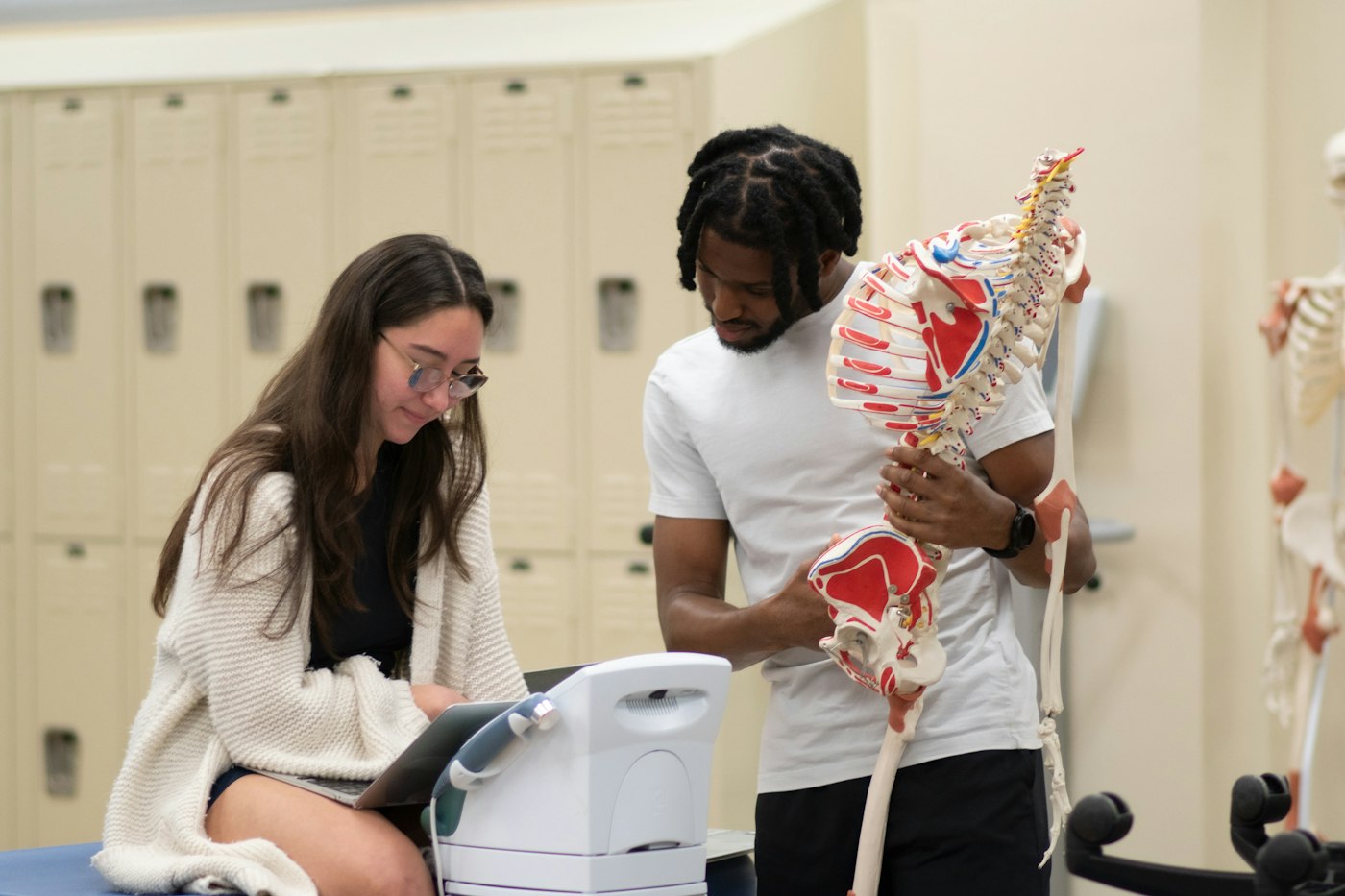
Anatomy and physiology
- Study one body system a day: heart, lungs, kidneys, digestion, nervous system, endocrine, muscles and bones.
- Focus on function, not just names. Know what each organ does and how systems work together.
- Learn directional terms and body planes: proximal and distal, medial and lateral, sagittal, frontal and transverse.
- Many students lose the most points here, so start A&P early rather than leaving it for the last week.
Biology and chemistry (if your school requires them)
- Biology: cell organelles, mitosis phases, DNA base pairing and simple Punnett squares.
- Chemistry: the pH scale, atomic number and mass number, ionic vs covalent bonds and balancing simple equations.
A 4-week HESI A2 study plan
- Week 1: take a practice test in each required section without notes. Read every rationale, including the ones you got right. Then focus on math.
- Week 2: reading, vocabulary and grammar every day. Keep a list of every word and rule you miss.
- Week 3: anatomy and physiology, plus biology or chemistry if required. One system a day, then practice questions.
- Week 4: timed practice in every section. Go back only to what you still miss.
Thirty to sixty minutes a day is enough for most students. Short on time? Squeeze each week into a few days, and keep the order. You’ll find the full plan, and a sample question you can try right away, on our HESI A2 exam prep page.
Test-day tips
- Don’t learn anything new the night before. Review your list of missed questions and sleep.
- Eat beforehand, bring your ID and arrive early, or check your setup early if you test remotely.
- Read each question twice. Watch for words like not, except and most likely.
- Don’t get stuck. If you can, make your best choice and keep moving so you don’t run out of time.
Your exam is yours. Prepare with original practice questions and your school’s materials, and follow your program’s testing policy. HESI is a registered trademark of Elsevier. Nursing Exams Made Easy is independent and not affiliated with or endorsed by Elsevier or HESI.
Want a free practice question every day?
Follow Tutor Shelly for daily NCLEX, HESI A2, FNP and PMHNP practice questions, practice cases, short video lessons and study tips.
Preparing for the HESI A2?
Our HESI A2 practice bank has original questions for math, reading, vocabulary, grammar, A&P, biology and chemistry, with a rationale for every answer. Inbox me on WhatsApp at +1 (281) 504-7578 for more details.