
Psychopharmacology for PMHNP Students: Antidepressants, Antipsychotics and Mood Stabilizers
About Course
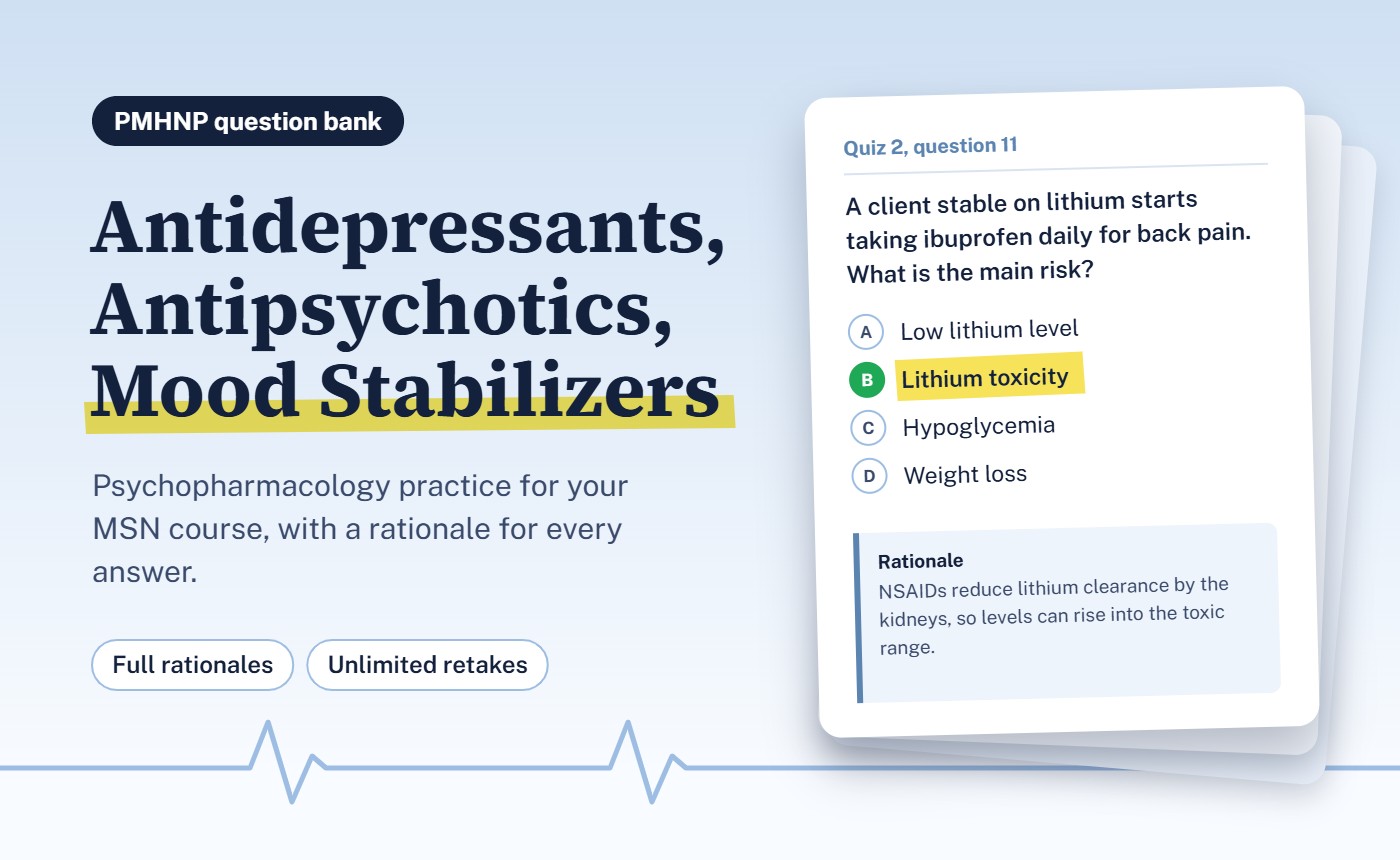
Practice PMHNP psychopharmacology with original questions on choosing, monitoring and teaching about psychiatric medications, each with a rationale.
Who it’s for
Psychiatric-mental health NP students preparing for the ANCC PMHNP certification exam and program exams.
What’s inside
- Antidepressants, anxiolytics and sleep medications
- Antipsychotics and their movement and metabolic side effects
- Lithium and anticonvulsant mood stabilizers
- ADHD medications
- Substance use: withdrawal, overdose and maintenance medications
- Dementia, older adults, and children and adolescents
- A rationale for every answer choice
How it works
- Answer. Work through short quizzes grouped by topic.
- Check. See the right answer and your score as soon as you finish.
- Learn why. Read the rationale for every choice, then retake. Questions and choices shuffle each time.
Try a sample question
Before starting lithium, which baseline tests are most important?
- Liver enzymes only
- Kidney function and thyroid function
- Complete blood count only
- Lipid panel only
Show the answer and rationale
Answer: B. Lithium is cleared by the kidneys and can cause hypothyroidism, so baseline kidney and thyroid function are essential. Lithium levels are then monitored once treatment starts.
Not sure yet? Take the free PMHNP practice test. It has 10 questions, needs no sign-up and shows the answer and rationale for each one.
Good to know
- One payment, no subscription. No monthly fees.
- Unlimited retakes on any phone or laptop.
- Original questions. Written to match the topics and style of the exam, not copied from it.
- Discount code: message Shelly on WhatsApp before you buy.
Nursing Exams Made Easy is independent and not affiliated with or endorsed by ANCC.
Course Content
Antidepressants, Anxiolytics and Sleep Medications
-
Quiz 1: Antidepressants, Anxiolytics and Sleep Medications
-
Quiz 1: Answers and Rationales
Antipsychotics, Mood Stabilizers and ADHD Medications
Substance Use, Dementia, Child and Adolescent and Special Populations
Student Ratings & Reviews

No Review Yet