About Course
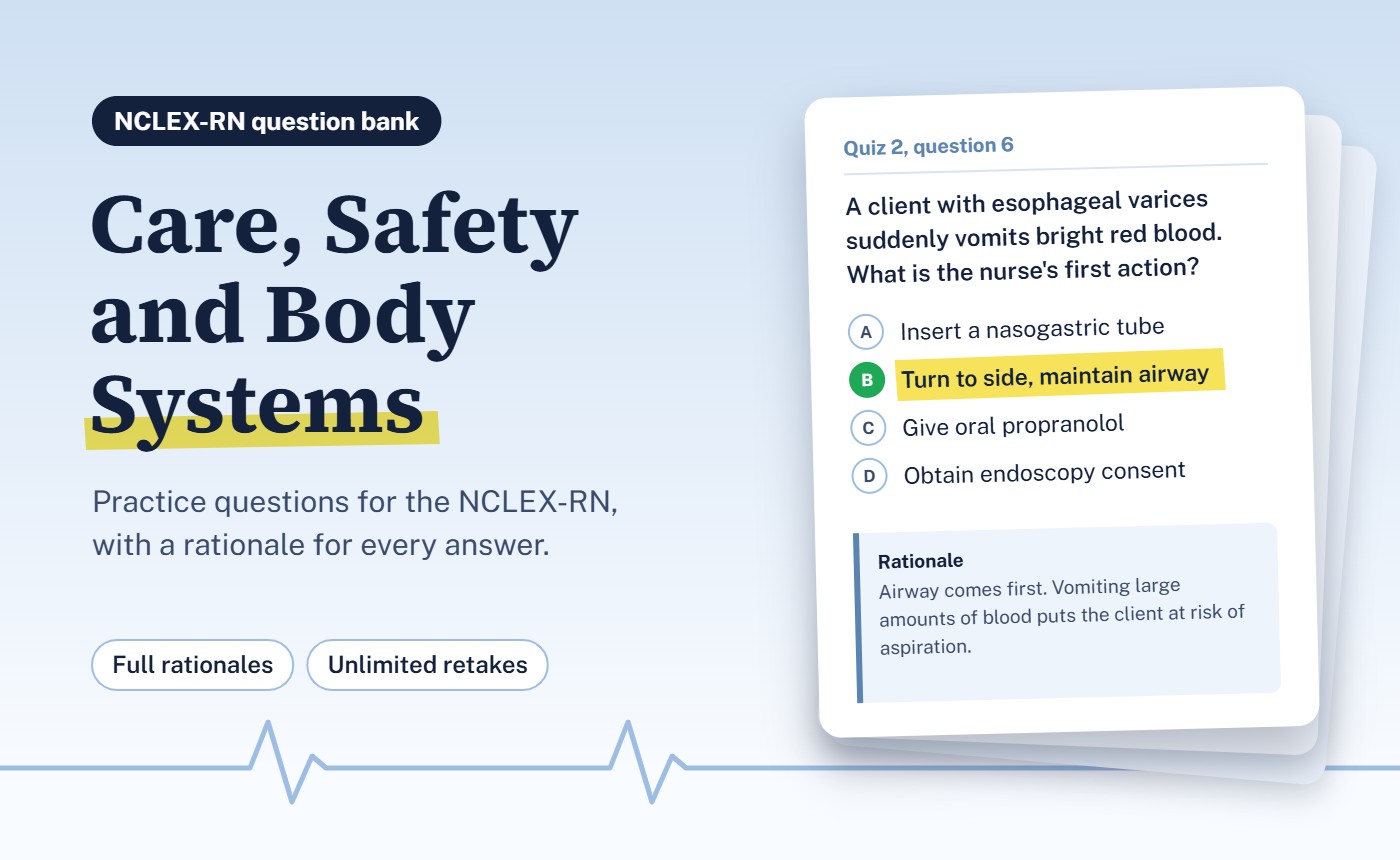
Practice the priority, delegation and safety decisions the NCLEX-RN expects, with a rationale that explains the thinking behind every answer.
Who it’s for
Nursing students and graduates preparing for the NCLEX-RN, and students reviewing for program exams.
What’s inside
- Prioritization and delegation
- Infection control and client safety
- Legal and ethical practice
- Physiological adaptation: GI, renal and cardiovascular
- A rationale for every answer choice
How it works
- Answer. Work through short quizzes grouped by topic.
- Check. See the right answer and your score as soon as you finish.
- Learn why. Read the rationale for every choice, then retake. Questions and choices shuffle each time.
Try a sample question
Which task can the RN safely delegate to unlicensed assistive personnel (UAP)?
- Teaching a client with new diabetes to use an insulin pen
- Assessing a postoperative client’s pain
- Measuring vital signs on a stable client
- Evaluating a client’s response to a PRN pain medication
Show the answer and rationale
Answer: C. Routine tasks for stable clients, like measuring vital signs, can be delegated to UAP. Teaching, assessment and evaluation require RN judgment and can’t be delegated.
Not sure yet? Take the free NCLEX-RN practice test. It has 10 questions, needs no sign-up and shows the answer and rationale for each one.
Good to know
- One payment, no subscription. No monthly fees.
- Unlimited retakes on any phone or laptop.
- Original questions. Written to match the topics and style of the exam, not copied from it.
- Discount code: message Shelly on WhatsApp before you buy.
NCLEX is a registered trademark of NCSBN. Nursing Exams Made Easy is independent and not affiliated with or endorsed by NCSBN.
Course Content
Management of Care and Safety
-
Quiz 1: Management of Care and Safety
-
Quiz 1: Answers and Rationales
Physiological Adaptation: GI, Renal and Cardiovascular
Student Ratings & Reviews